
Water Pressure Problems and PRV Replacement in Greater Seattle
Done Right Plumbing tests, adjusts and replaces pressure reducing valves (PRVs) across the greater Seattle area. Washington's plumbing code requires a regulator whenever the incoming pressure tops 80 psi, and most homes do best set between 50 and 70. If pipes bang, toilets refill on their own or a relief valve drips, we gauge the pressure and fix the cause.
How Do I Know My Water Pressure Is Too High?
A gauge reading above 80 psi at an outdoor faucet settles it, but the house usually tells you first. Pipes bang when a valve snaps shut, toilets refill on their own, faucets spit when they open, the relief valve on the water heater drips, and washer hoses and supply lines fail years before they should.
High pressure rarely causes one dramatic failure. It wears on everything with a seal or a spring, so the same house goes through fill valves, faucet cartridges and appliance hoses faster than its neighbors, and the water heater's relief valve, which opens on pressure, starts to weep. Low pressure is a different problem with different causes, which we cover further down.
Real Work: A Regulator Where There Was None
In August, Jeremy and Joseph T. went into the crawlspace of a north Kirkland home whose water came in from the street with nothing to regulate it. The service came through the foundation and rose straight to the house's galvanized trunk line, so every faucet, toilet valve and appliance in the house took whatever pressure the street delivered. They cut a new one-inch Watts regulator into that riser on unions, piped it in PEX A, set it to between 60 and 65 psi and insulated it, and at the same visit they added a thermal expansion tank at the home's tankless water heater, since a regulator closes the system.
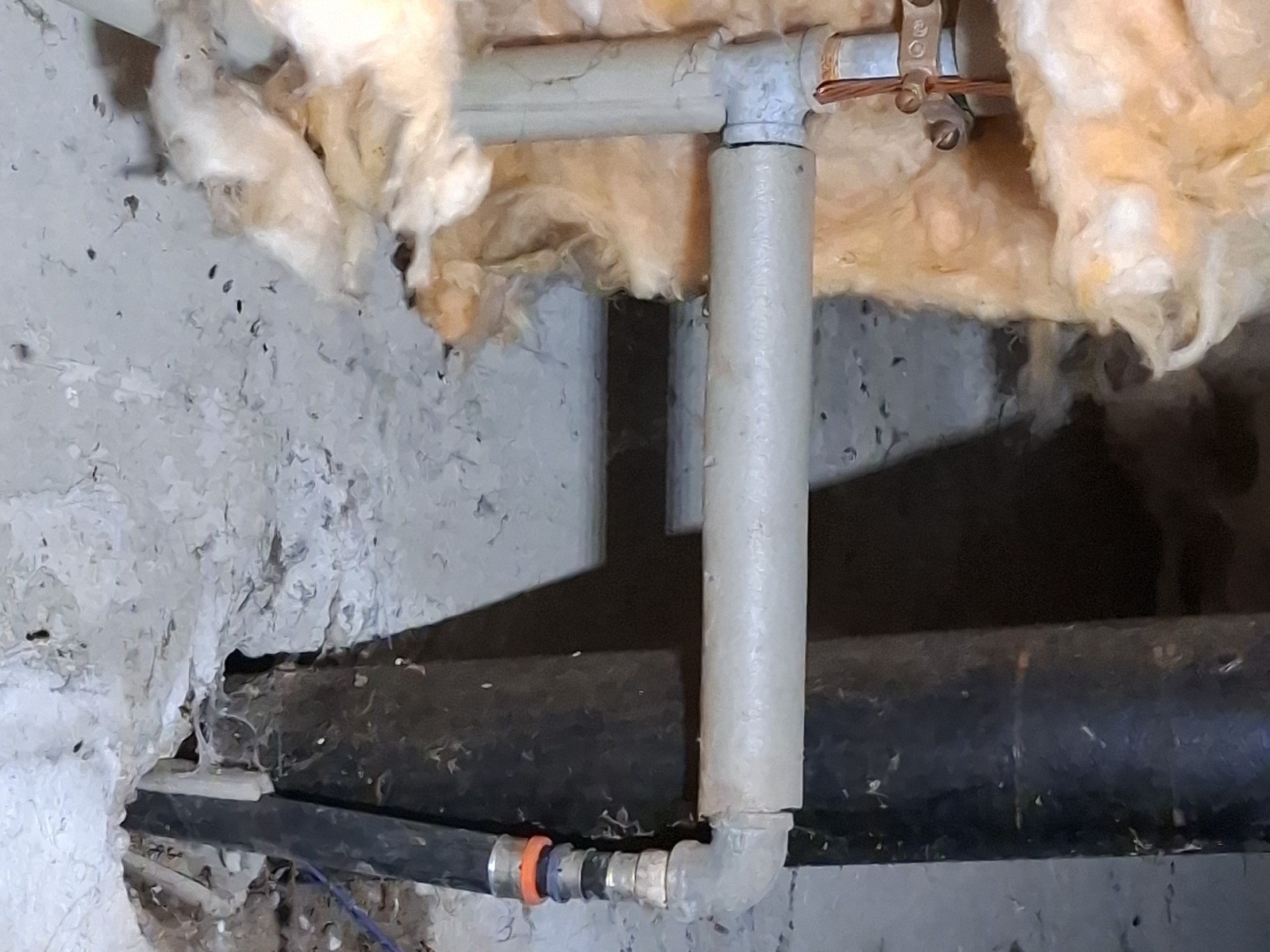
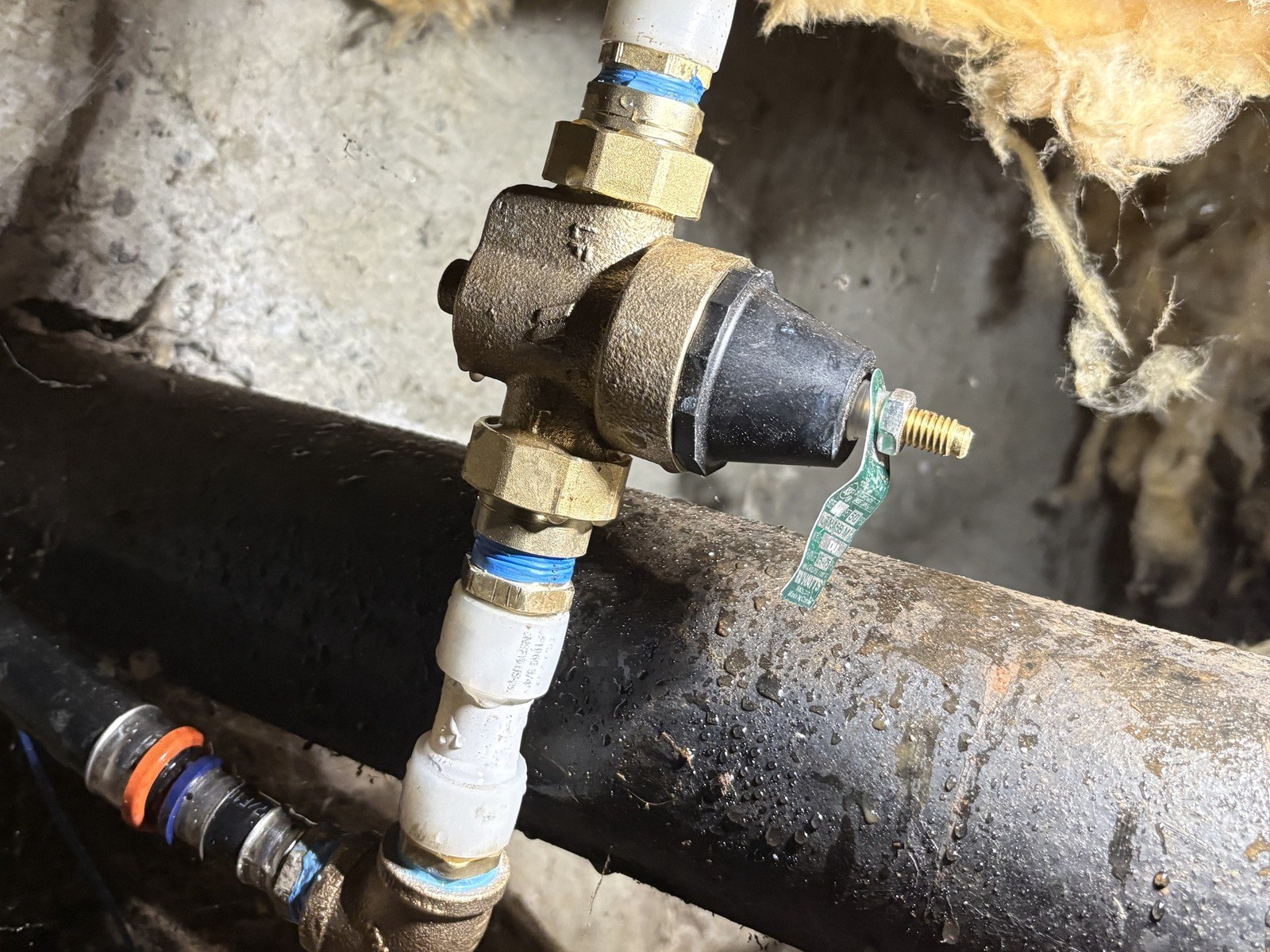
In September, Nick and Jeremy put a new one-inch regulator and a new main shutoff into a garage in Seattle's Wedgwood neighborhood, and regulators went in on our recent water line replacements in Shoreline and Mill Creek as well.
What We Do
Test the pressure first
Every visit starts with a gauge on an outdoor faucet near where the line enters the house, read with the water off inside so we see the static pressure your plumbing lives with. Pressure climbs at night, when the neighborhood stops drawing water, so a midday reading can understate what the pipes see in the small hours.
Replace a regulator that has stopped working
Regulators wear out. The spring and diaphragm inside lose their grip and the strainer clogs, so the valve either lets street pressure through or starts choking the flow. We replace it like for like or with a better valve, on unions so the next replacement is easy, with a shutoff beside it, and we set it before we leave.
Add a regulator where there is none
Some houses were never given a regulator at all, like the Kirkland home above. If the gauge reads over 80 psi, the code requires one, and below that it is still worth having when the pressure swings through the day.
Protect the water heater
A regulator stops heated water from pushing back into the street, so the expansion that happens each time the water heater runs has to be absorbed inside the house. That is what an expansion tank is for, and we check for one, and its charge, whenever we work on a regulator.
Low pressure is a different job
Weak pressure everywhere at once usually means a regulator stuck partly closed, a clogged strainer, a leak on the water service, or old galvanized pipe that has narrowed from the inside. A gauge reading above and below the regulator tells them apart. If the problem is the line itself, that is our main water line repair work, and a hidden leak is a job for leak detection.
Why Pressure Runs High Around Puget Sound
Water systems here rise and fall with the hills, so utilities divide them into pressure zones and run their own pressure reducing stations to keep each zone in range; the City of Edmonds' water system alone has 18 of them. A house at the low end of its zone sees the most pressure, and a utility can change what a zone delivers after work on its system. Everything on your side of the meter is yours, including the regulator, which is why the gauge at your own faucet, not the utility's figure for the neighborhood, is what decides whether your house needs one.
The plumbing code draws the line at 80 psi, and the FAQ below explains what it requires. Most homes are happier well under that limit, which is why we set regulators in the 50 to 70 range.
Our Process
1. Gauge it
A static reading at the outdoor faucet, and at the laundry hookup if the outdoor faucets are piped ahead of the regulator.
2. Find the regulator, or where one belongs
On a garage wall, on the riser in a crawlspace, in the basement beside the main shutoff, or in a box by the meter.
3. Install it so it can be serviced
Unions on both sides, a shutoff beside it and enough room to reach the adjusting bolt.
4. Set it and check the water heater
We set the house pressure, then check the expansion tank and charge it to match.
5. Recheck the house
We run the fixtures, watch the toilets refill and check every joint we touched before we pack up.
FAQs About Pressure Regulators
How much does it cost to replace a pressure reducing valve?
On a three-quarter or one-inch line, replacing or adding a pressure regulator usually runs about $800 to $1,500 before tax, based on our recent jobs. A larger inch-and-a-quarter valve, repiping to make room for the valve, or an expansion tank added at the same visit costs more. We price it after gauging the pressure and seeing where the valve sits.
How do I know my pressure regulator has failed?
The clearest sign is a gauge reading above the regulator's setting, or one that creeps higher overnight. Around the house it shows up as banging pipes, a dripping relief valve on the water heater and toilets that refill on their own. A regulator can also fail the other way, sticking partly closed and starving every fixture at once.
Can a pressure regulator be adjusted instead of replaced?
Often, yes. Most regulators have an adjusting bolt on the bell, and turning it changes the outlet pressure, so a valve that is set too high or too low can be corrected quickly. If it will not hold a setting, creeps up again or barely responds to the bolt, the valve is worn out and replacing it is the fix.
Do I need an expansion tank once a pressure regulator is installed?
In most houses, yes. A regulator keeps heated water from flowing back to the street, so every time the water heater runs, the expansion has to go somewhere, and the plumbing code requires a way to absorb it on a closed system. An expansion tank, charged to match your house pressure, does that job.
Is a pressure regulator required by code in Washington?
Yes, when the pressure is high enough. Washington adopts the Uniform Plumbing Code, which requires an approved pressure regulator with a strainer wherever the static pressure in the supply piping exceeds 80 psi, set so the house sees 80 psi or less. Below that line a regulator is optional, though many homes still benefit from one.
Water Pressure Service Across Snohomish and King Counties
We test and replace regulators from our Lynnwood shop across both counties, in Seattle, Shoreline, Lynnwood, Edmonds, Bothell, Mill Creek, Kirkland, Bellevue and the towns between them. For the questions homeowners ask before they call, see what your water pressure should be.
Licensed, Bonded & Insured
WA Contractor License #DONERRP852N5
Done Right Plumbing is licensed, bonded and insured in Washington State and family-owned since 2011, and our regulator installs typically carry a two-year warranty on parts and labor.
Call About Your Water Pressure
Banging pipes, a dripping relief valve or a gauge reading over 80? Call for a free estimate, or request a callback and we will reach you at a time that works.